
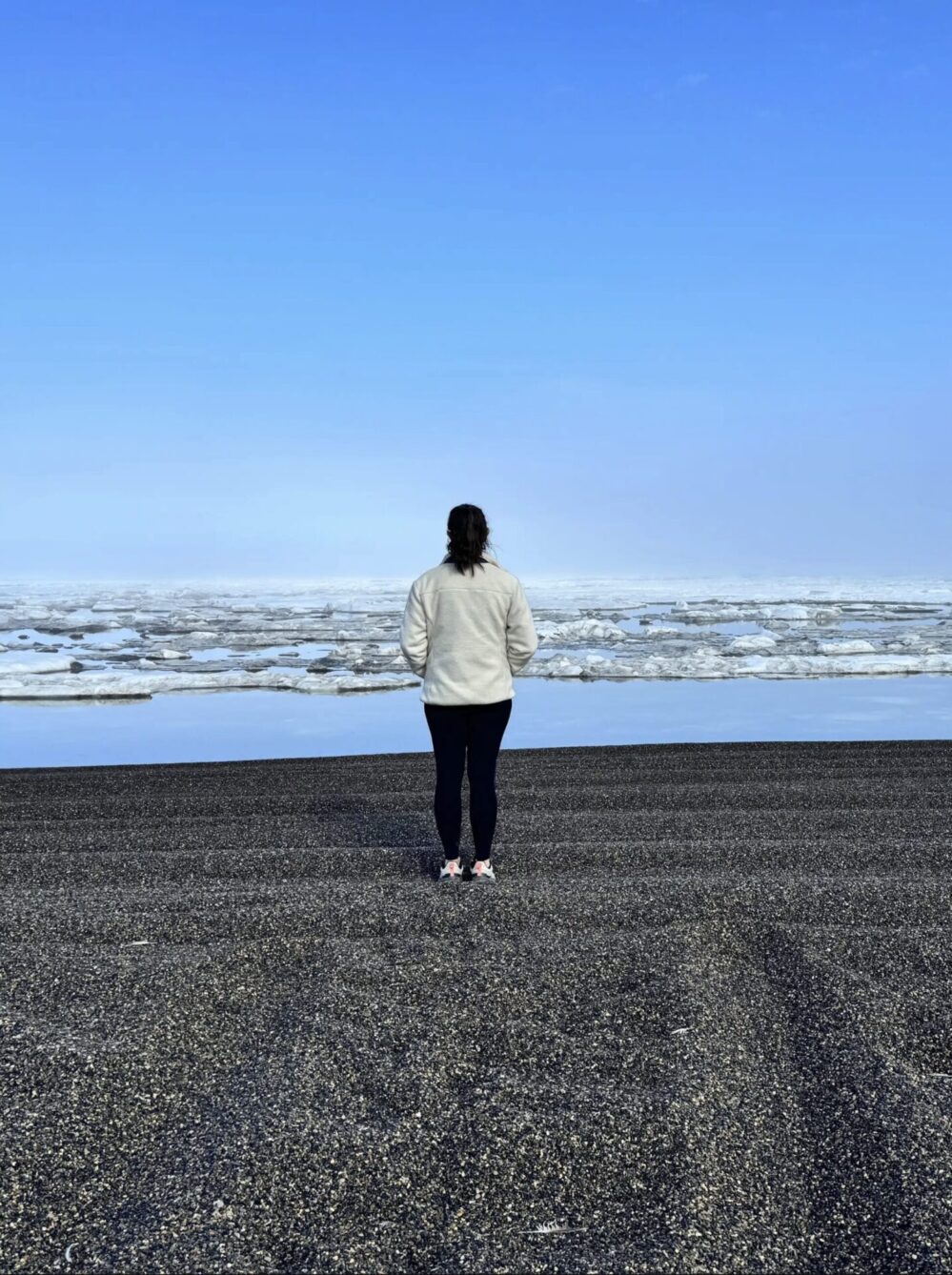
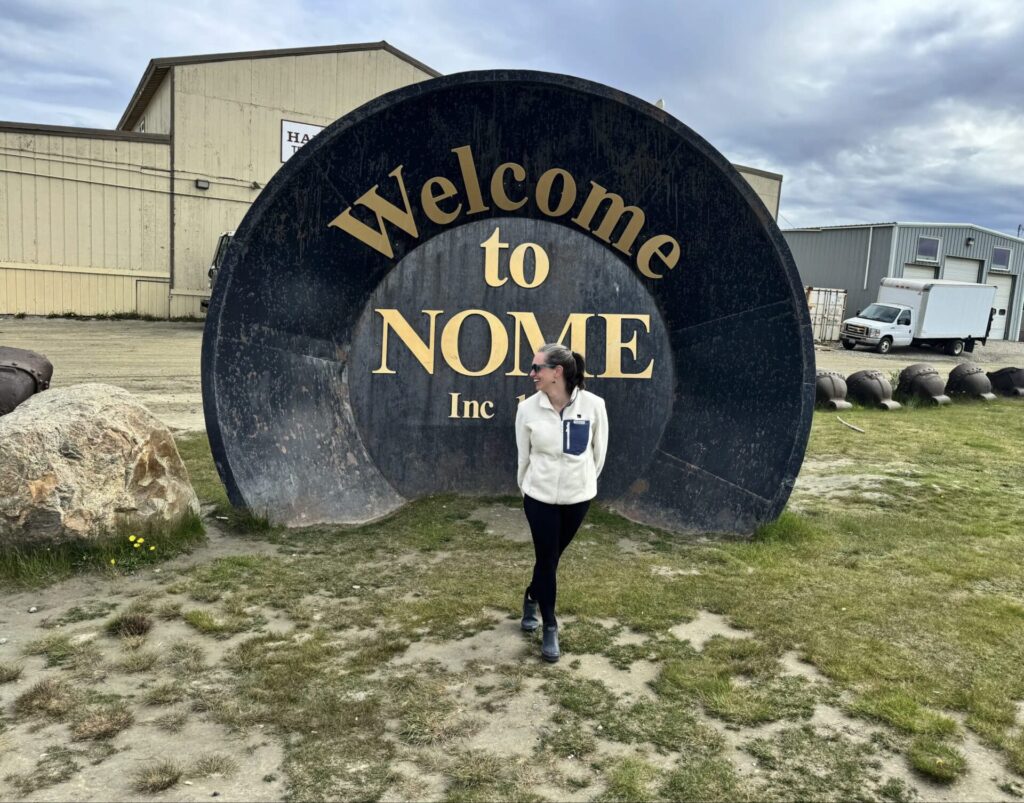
SPECIAL CORRESPONDENT Valerie Stimac Bailey visited Nome, Barrow and Utqiagvik last summer. She authors the “Valerie & Valise” travel blog which focuses on travel in Alaska and the American West. This is her report.

I really didn’t know what to expect when planning what I called my “Arctic Adventure” this past summer. Even many Alaskans don’t visit these communities off the road system, and there wasn’t a ton of information to guide my trip. I was confused by some of the online resources and maps! In the end, I put together a week long trip hopping from Anchorage to Nome, Kotzebue, and Utqiaġvik in turn, with a lot of air miles in between.
Based on my trip, I wrote several guides on my own site about how to visit each community – but it’s also helpful to know which one(s) to visit, based on your own travel style. Here are my observations to guide you in your own arctic adventure trip planning.
Nome
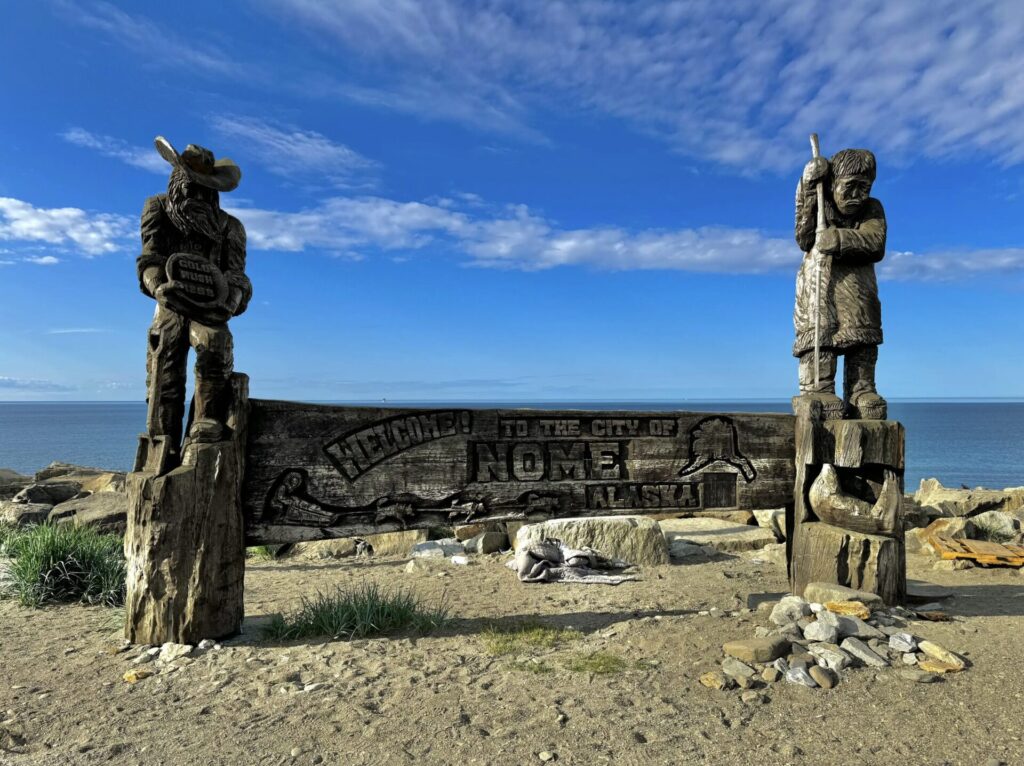
Nome is where Alaska’s Arctic (or in this case subarctic) feels most approachable; it’s a frontier town that’s easy to reach yet still remote enough to remind you you’re somewhere truly wild.
There’s an undeniable charm to Nome’s rugged personality: part gold rush history, part coastal outpost, part modern hub of Inupiat life. You’ll see this mix everywhere — in the weathered storefronts downtown, in the small but lively cultural museum, and in the everyday rhythm of locals who balance subsistence and modern work.
Nome is best for travelers who want a taste of the region without feeling totally off the grid. You can fly here from Anchorage or arrive by cruise ship, then rent a car and drive the region’s famous gravel roads to other smaller communities, historic sites, and a few natural wonders. That’s something you can’t do in most other Arctic communities.
Nome’s accessibility makes it ideal for curious travelers who like a little independence: people who want to explore on their own, learn through observation and conversation, and still end the day with a hot meal and Wi-Fi. If you want your Arctic adventure grounded in history and humanity, Nome fits the bill.
Kotzebue
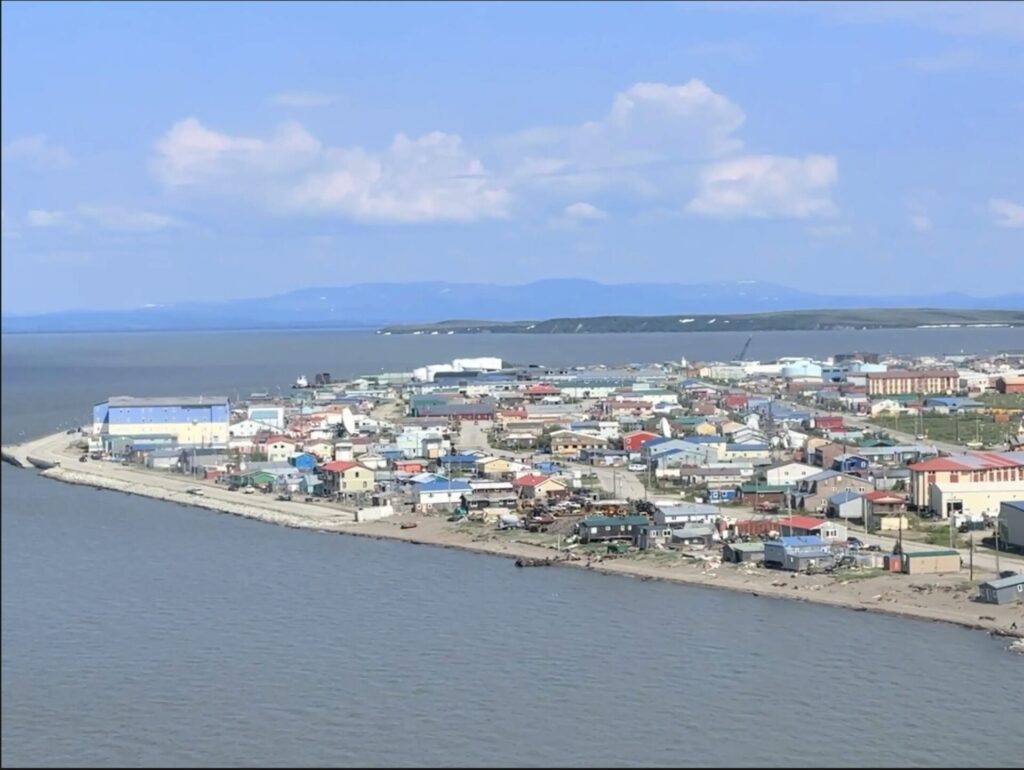
Kotzebue sits quietly at the edge of the Chukchi Sea, a compact, windswept community where daily life and the natural world are deeply intertwined. It’s an Iñupiat town first and foremost – You’ll see evidence of how subsistence living and the harsh environment shape everything here.
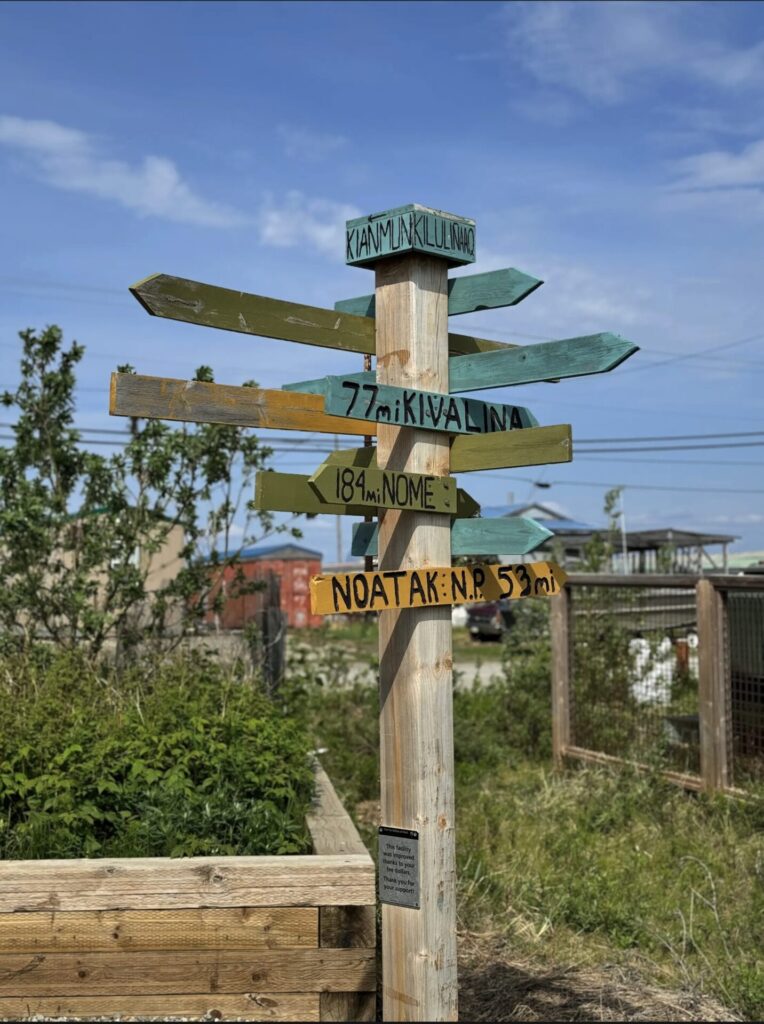
You’ll also find fewer traditional “tourist attractions” in Kotzebue, and that’s exactly what makes it special. The primary draw is the group of National Park Service sites headquartered here: the Northwest Arctic Heritage Center serves as the visitor center for several of the country’s least-visited parks, including Kobuk Valley and Gates of the Arctic National Parks, as well as Cape Krusenstern National Monument, Noatak National Preserve, and Bering Land Bridge National Preserve. (The Bering Land Bridge Visitor Center is actually in Nome, though flights to the unit leave from Kotzebue.) You can learn about these vast wilderness areas through exhibits, films, and ranger programs, without ever leaving town; a few local operators offer flights too, though you’ll want an ambitious travel budget (at least $5,000 per person) to visit all five.
In town, Kotzebue isn’t lively or luxurious, but it’s real. That authenticity makes it an unforgettable stop for those curious about Arctic life as it’s truly lived.

Utqiaġvik
Utqiaġvik truly feels like the top of the world; it’s remote, stark, and unforgettable. This is the northernmost community in the United States, and everything about it feels extraordinary: the endless daylight in summer, the biting cold that shapes every aspect of life, and the pride of the Iñupiat people who call it home.
Travelers who pick Utqiaġvik aren’t chasing comfort; they’re chasing experience. You’ll likely take a guided city or culture tour, visit the Iñupiat Heritage Center, and stand beneath the Whale Bone Arch looking out over the Arctic Ocean; there are also tours out onto Point Barrow to the northernmost tip of land in the U.S. where you can keep an eye out for polar bears on the ice or even on land.
Utqiaġvik is best for travelers who want to immerse themselves in the extremes of weather, geography, and human resilience. It’s also relatively easy to reach, with two flights daily from Anchorage that don’t cost as much as you’d expect.

Perhaps more than the other two communities, the mix of pride, endurance, and openness you’ll encounter from local hosts is unlike anywhere else in Alaska. If you’ve ever dreamed of standing at the top of the world and feeling the full weight of that phrase, Utqiaġvik is where you go.
Valerie Stimac Bailey runs the travel blog Valerie & Valise, which focuses on travel in Alaska and the American West. You can follow her blog for more Alaska travel articles (valerievalise.com) or on Instagram (@valerievalise) and Facebook (facebook.com/valerievalise).
Share this Post
