
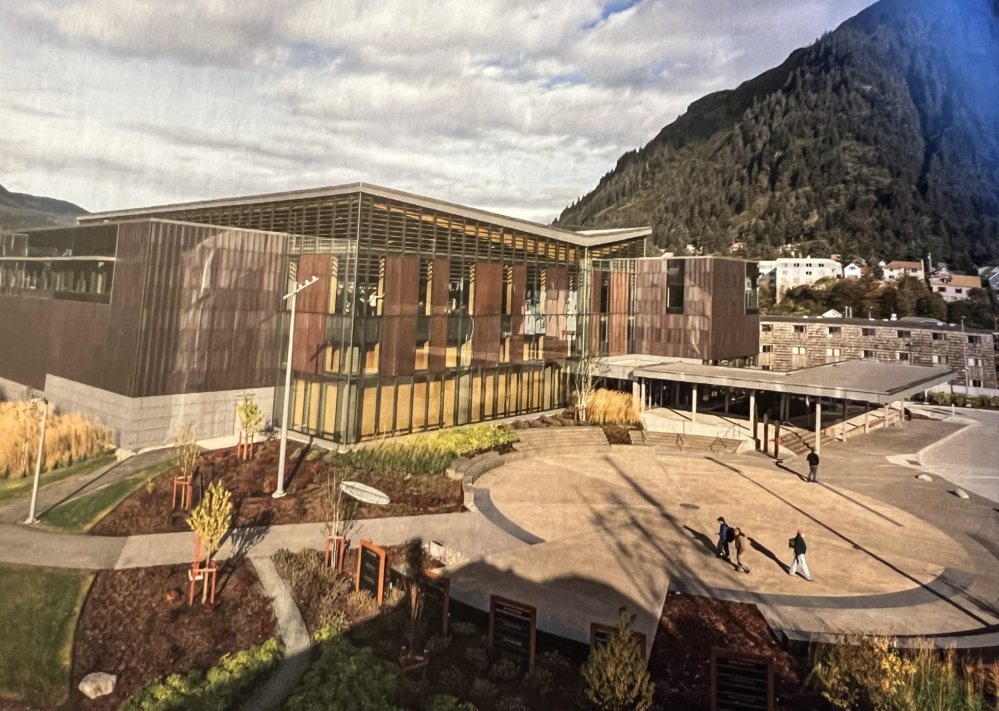
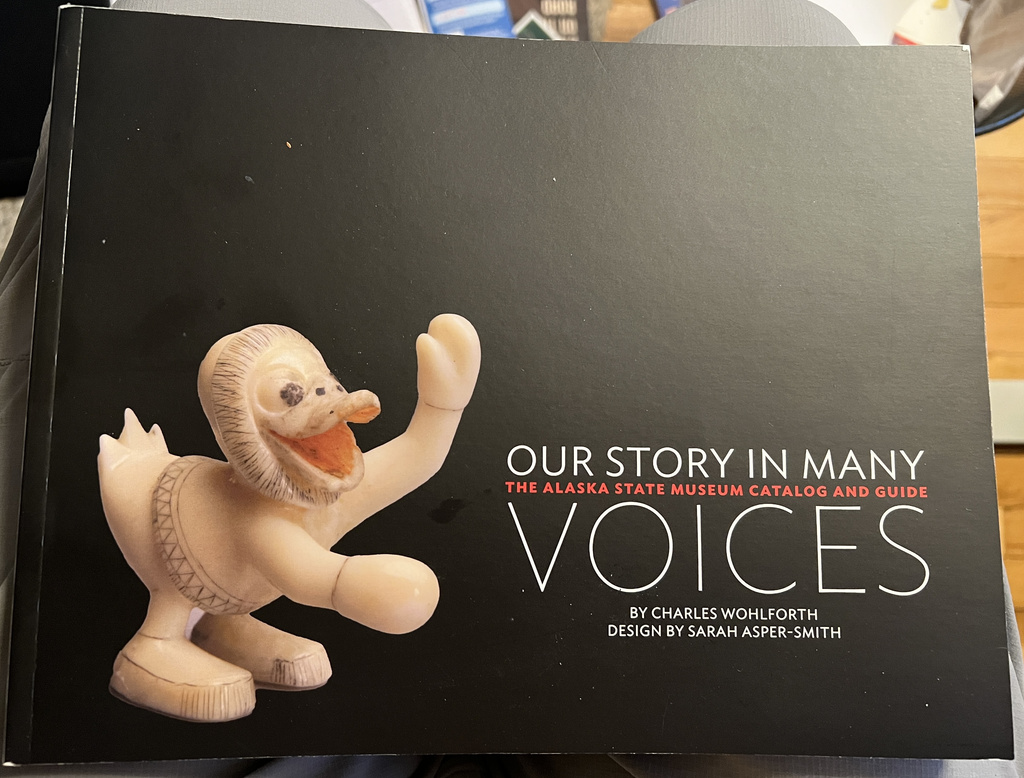
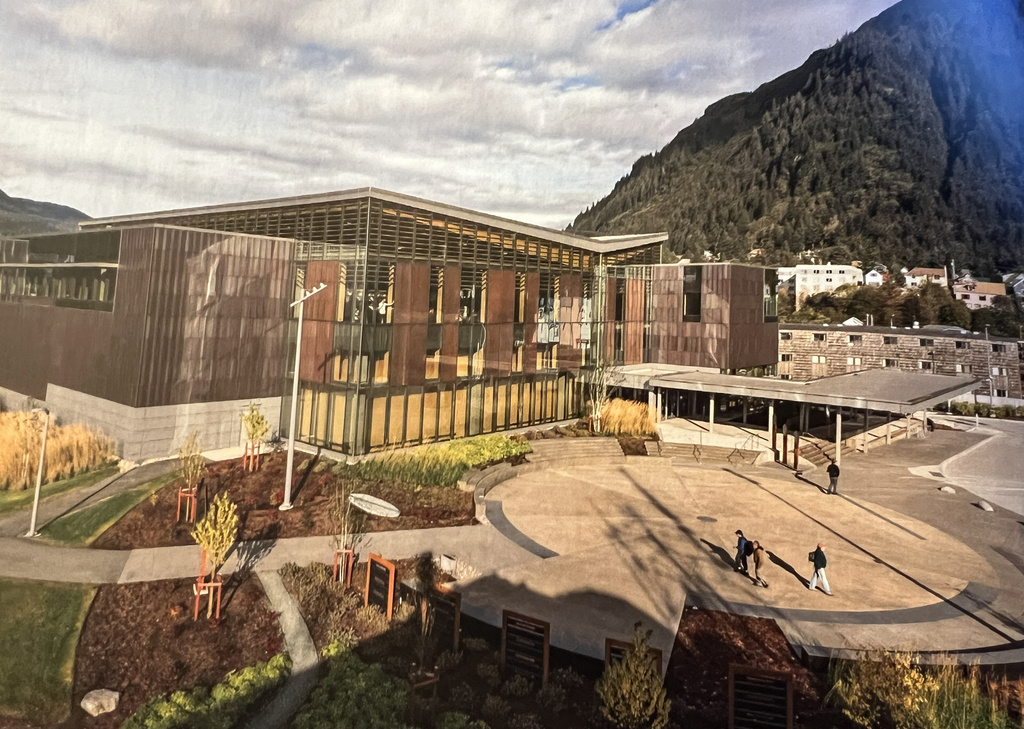
This new book by Charles Wohlforth is a catalog and guide to the Alaska State Museum in downtown Juneau.
I’m a big fan of Wohlforth’s work. He and I met in the newsroom at the Anchorage Daily News many years ago.
If you haven’t visited the museum in-real-life, I believe this book will make you want to do so.
I’ve visited the museum several times. I think you’ll find that each time you visit, you’ll find a different exhibit or map or photograph that catches your eye. “Our Story” captures many of those foundational pieces. Further, there’s a healthy backstory to many of the exhibits.
Even though the museum is in Juneau, many corners of the state are well-represented. There are artifacts large and small from many of the distinct native groups in the state: Tlingit, Athabascan and Inupiat…among others. There’s a map in the book showing where the groups live–from the southeast tip near Ketchikan to the end of the Aleutian Chain to the North Slope.
Big stories about Alaska flowed from a variety of seafaring colonists: Russian, Spanish, French and British. The Russians first landed in 1741 and Captain James Cook came in 1778. The Russians made a lasting impression and one corner of the museum is dedicated to Russian America. In the book, Wohlforth documents the effects of the extensive fur trade and the infrastructure to keep it going: enslavement, government, business and religion.
The pivot to American resource extraction starts in 1867 after the U.S. took over administration of Alaska from the Russians. Salmon, timber, gold and oil are big elements in Alaska’s history.
Readers get a good overview of how those resources affect those who call Alaska home. A big portion of the museum is dedicated to “American Alaska” since 1867. That includes the big changes as a result of World War II and the massive military build-up in the state.
Much of “Our Story” is dedicated to the repository of artifacts in the museum. The careful photography and descriptions offer an up-close look at the everyday tools and ornaments of Alaska’s indigenous people.
But tying it together with the rush of modern commerce, warfare and governance is a key component to better understand the dynamic matrix of The Great Land.
“Our Story in Many Voices” offers readers an intimate glimpse of an amazing collection at the museum in Juneau.
Most importantly, it may inspire you to visit in person. Don’t miss it.
Our Story in Many Voices is published by the University of Alaska Press.
Share this Post
