
NOTE: Last week, I did a story for the Anchorage Daily News about Alaska Airlines’ new Anchorage-Tokyo flight. I interviewed Yoshi Ogawa. Yoshi grew up in Tokyo. He is a longtime friend and colleague in the travel business (he’s now a financial planner). I didn’t have room for all of his tips, so I wanted to share with you here. I added some links to provide a little more how-to info. –Scott
Insider’s Japan Travel Tips, Written by Yoshi Ogawa
Visit Japan Website
Before you land at Narita Airport, be sure to get yourself registered at Visit Japan Website ( https://services.digital.go.jp/en/visit-japan-web/ ). Until you can get a QR code on your mobile phone, you are not done. This which will work like a pass going through the immigration and customs. Get it started before you leave Anchorage. If you don’t have this QR code, you will be sent to a different line. Explainer: https://blog.wego.com/visit-japan-web/
Luggage Management
Since you will be traveling by a public transportation, managing your luggage will make your trip so enjoyable. Use a luggage sending service from/to Airport and from/to hotels or wherever you go. The service is quick and very reasonable. This service is called “takkyubin.” Only people traveling with big suitcases on trains are foreigners. Japanese people ship the luggage and/or gifts home ahead of time to the destination or to their homes. That’s how you travel on trains in Japan.
Hotel Booking
The location and the price are important, but you need to make share the size of the room before you book. Hotel rooms in the cities are not that expensive, but the room size can be VERY small. The size of the room should be incorporated in your final decision.
Travel Debit Card
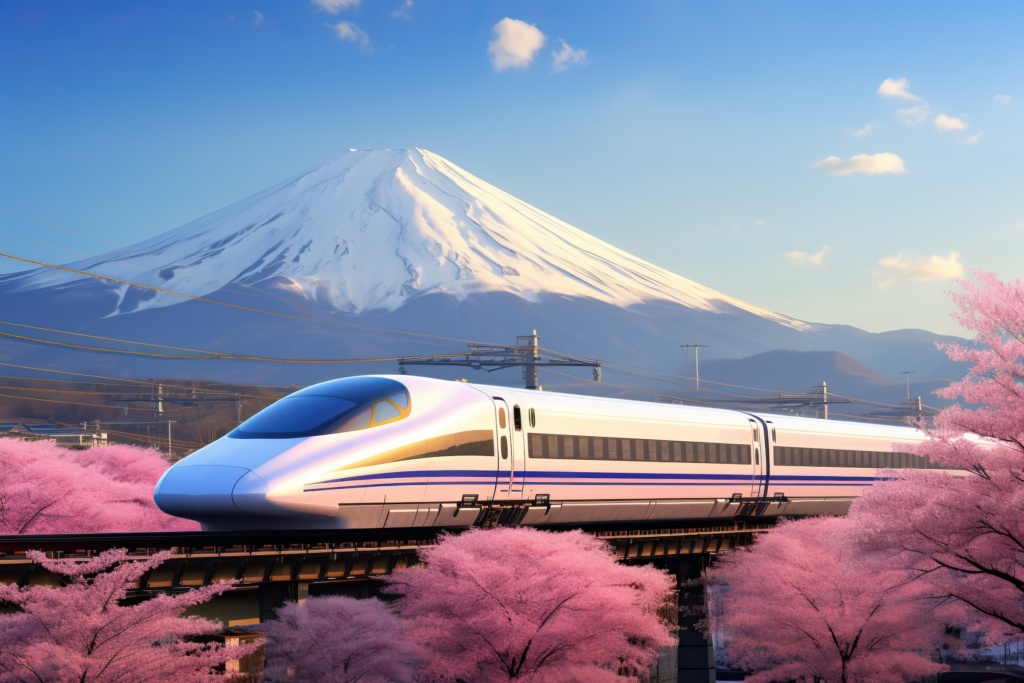
If you are not using a Japan Rail Pass, get a travel debit card called “SUICA” card. You can get a card at just about at any train stations and the card is good for trains, subways, busses, taxis and even at convenient stores. It’s perfect for getting around any cities in Japan. You can load, say $10,000 yen (about $65) and it will last you for a while.
Cash or Credit Card
Since Covid, many shops and stores in Japan now accept credit cards. But if you want to enjoy some street food, then, have some cash on hand. Make sure your cash is relatively clean so that they will go through a scanner for exchange. Exchange USD into Japanese yens at the airport upon arrival. The rates are good and it is quick and easy. For the best rates, you can go to a convenience store, i.e. 7-11 or Lawson to get cash out of ATM’s.. It is virtually everywhere.
Water
Tap water is safe to drink.
Electricity
100V is used in Japan. You do not need a converter or an adopter to use your lap tops etc.
WiFi Access
WiFi Access is available at hotels and airport bus and many public areas. Get international plan through AT&T ($12 per day). You can reserve and rent a pocket WiFi before you leave if interested. It can be delivered to your hotel before your arrival and you can drop it off into the post office box at the airport when you leave.
Handkerchiefs
Bring handkerchiefs to wipe your hands as well. Take several Kleenex travel size packs as they will come handy for you in time of needs. Japanese toilets are either extremely high tech or low tech.
Tipping
No tipping is required or expected for the excellent service you receive at the restaurants and hotels. As a matter of fact, hotel charges include “service” for tips.
Weather
In the fall, be aware of occasional typhoons with strong wind and rain. Wear comfortable clothes without showing your cleavage or a belly button. Avoid wearing strong colors like red, yellow or green unless you want to stand out in the crowd. Don’t worry about packing an umbrella. You can buy an umbrella if needed at the convenience store for like $5 or $6.
Garbage
Plan to take your garbage back to your room as garbage cans are hard to find on streets. Leave-no-trace camping is the idea. When you find a trash can, don’t forget to separate your trash for recycling purpose.
Going to a Restaurant
The following is a description of a visit in an average Japanese restaurant, for example, in one that you can find on the restaurant floors of department stores: A Japanese restaurant usually presents its dishes with the prices in a window just in front of the entrance. The presented dishes are made of wax and look very similar to the real ones.
When you enter the restaurant, the staff will welcome you with the word “Irashaimase” as is usual in any Japanese store. The waitresses and waiters are trimmed for efficiency, politeness, and attentiveness. After sitting down, green tea or water will be served for free and later refilled. You also get a wet towel (oshibori) to clean your hands. In some Japanese restaurants you may eat sitting on tatami mats. In such restaurants, you must also take off your shoes before stepping onto the tatami floor. If chopsticks are not already put on the table, you can find them in a box. Often they are wooden chopsticks that must be separated into two chopsticks before usage. The bill will be given to you upside-down right after you get the meal. You will pay at the exit when you leave. Do not give a tip. Tipping is not done in Japan. In some restaurants, you may have to pay first at the entrance and get a coupon that you exchange for the meal inside.
Table Manners
You start eating after saying “Itadakimasu” and finish with “Gochiso sama deshita”. Slurping is done all the time while eating (soup, noodles, etc.), but do not burp. Blowing your nose in public, and especially at the table, is considered very rude. Soy sauce is usually not poured over white, cooked rice. When drinking alcohol you should remember that the Japanese pour alcohol into each other’s cups, but one does not pour it into his or her own glass. You should always check if your friends’ cups are getting empty, and then give them more. If someone wants to give you more to drink, you should take your glass and hold it towards that person.
How to eat …
- … Noodles:
Lead them with the chopsticks step by step into your mouth. Keep the distance between the bowl and your mouth small and slurp loudly. - … Soup:
Either you get a ceramic spoon which makes eating soups no big problem for an inexperienced foreigner, or you do not get one. In that case you drink the soup out of the bowl as it were a cup and fish out the solid stuff with the chopsticks. That’s also true for eating noodle soups (e.g. Udon, Ramen). - … Sushi (Nigiri, Maki):
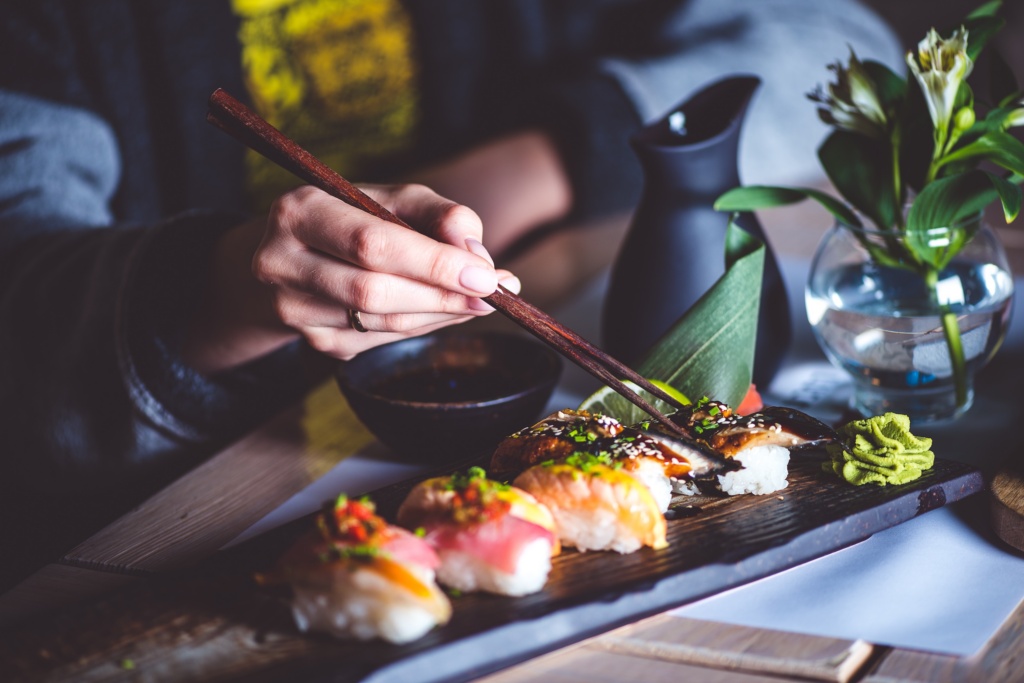
Give some soy sauce into a special little plate. The correct way of dipping nigiri sushi is to dip it up side down with the fish part into the sauce. Only a few kinds of nigiri sushi should be eaten without being dipped. Hands or chopsticks can be used for eating Sushi. - … Sashimi:
Give some soy sauce into a special little plate. Add wasabi into the soy sauce and mix it. Use the sauce for dipping the sashimi pieces. - … Big pieces of food:
(eg. tempura prawn, futo maki, tofu) Generally, you either separate the piece with your chopsticks, or you just bite a piece off and put the rest back onto your plate.
Chopsticks
Some of the most important chopstick rules are:
- Never stick the chopsticks into the food, especially into the rice. Only at the funeral service chopsticks are stuck into the rice that stands on the altar. When you are not using them, put the chopsticks in front of you on the table or a dish with the tip to the left.
- Don’t give food from your chopsticks directly to somebody other’s chopsticks. Only at funerals the bones of the burned body are given in that way from person to person.
- Don’t spear food with your chopsticks.
- Neither point with the chopsticks to something or somebody nor move them too much around in the air.
- If you want to separate a piece of food into two pieces with chopsticks, do it step by step by exerting controlled pressure on your chopsticks.
Once you learn the proper way of using chopsticks, the Japanese people will praise you for it all the time. Knife and fork are used for western food only. Spoons are used for eating certain Japanese dishes, for example curry rice. A Chinese ceramic spoon is sometimes used to eat soup.
Quick Tips
- Avoid Direct Eye Contact (with strangers):
Just because Japanese people don’t make direct eye contact, it does not mean that they do not want to be friendly. Direct eye contact can be threatening at times. Also, smiling can be a sign of one’s embarrassment. When they nod and smile at you, it does not mean that they understand you. Be aware. - Say You Are Sorry:
If in doubt, say you are sorry – “domo sumimasen.” Your attorney may not agree with you’ however, in Japan, being apologetic is a virtue. “Domo sumimasen” can mean “I am sorry,” “excuse me,” “thank you,” “goodbye,” or “hello.” It is a very practical phrase. - Only Clean U.S. Bills, Please:
When you exchange U.S. currency to Japanese yen, you will need clean bills. Wrinkled or worn-out bills will be rejected at the bank for exchange. It is because bills are run through a scanner for exchange in Japan. - Walk on the “Wrong” Side:
Look right before crossing streets. Yes, they drive on the “wrong” side of the street. Consequently, walk on the “wrong” side of the street to be safe. - Handkerchiefs, Handkerchiefs, and Handkerchiefs:
Bring extra handkerchiefs with you. You will need them in lieu of napkins and hand towels. However, do not use to blow your nose! It is just not done in Japan. You may attract lots of attention.
Things to remember
- If people stare at you, stare back at them and smile unless they are “Yakuza”. No direct eye contact is recommended with strangers.
- If they are waving good-bye to you, they actually want you to come to them. So, please don’t go away.
- “Hai” (yes in Japanese) can mean No and “iie” (no in Japanese) can mean Yes. If they don’t answer, it probably means no. Good luck!
- If they smile at you and nod, they are saying that they have no clue what you are talking about. They are just being polite.
- When you ride the train, be prepared to go to sleep and be ready to get up at your station. If you can master this skill, you have “arrived.”
- Have a wonderful time !!!
Share this Post
