
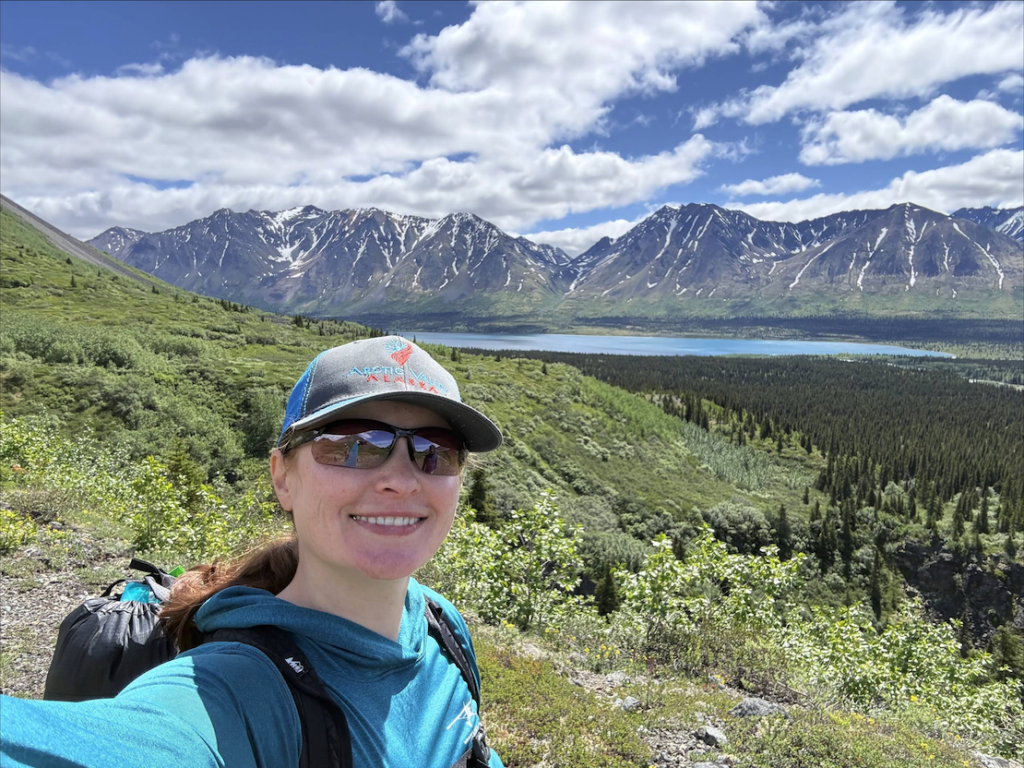
SPECIAL CORRESPONDENT Maria Benner traveled to Twin Lakes in Lake Clark National Park with Alaska Alpine Adventures and Lake Clark Air. This is her report.
My husband and I built a log cabin in McCarthy, and soon realized that the downside of having a cabin is that we kept returning to the same place. I love our little cabin, but I also felt like I was missing out on the rest of Alaska. So I started a birthday tradition. Every year in late June, I visit a place in Alaska where I’ve never been before. As the years have passed, the destinations have become increasingly remote because I’d already checked off many of the easier-to-access ones.
While researching how to build our own log cabin, we discovered the documentary Alone in the Wilderness. I later read One Man’s Wilderness, based on Dick Proenneke’s journals, and became fascinated by the little cabin he built on the shore of Upper Twin Lake in what is now Lake Clark National Park. Ever since then, I’d wanted to see it, and this was finally the year.
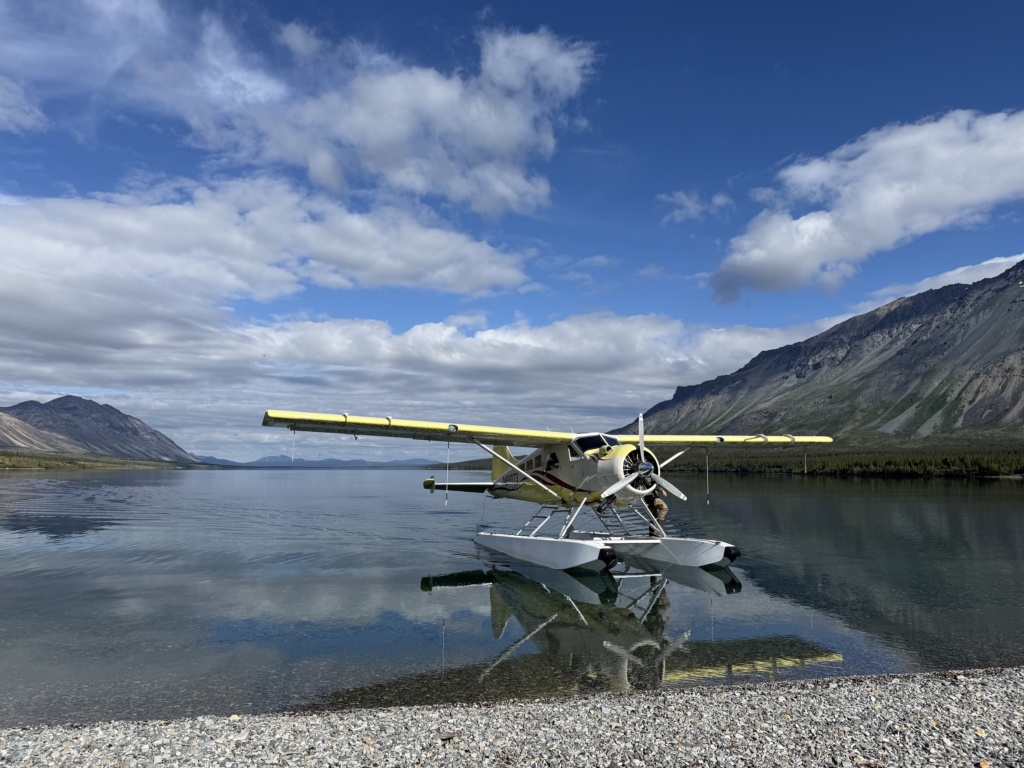
There are many ways to experience Lake Clark National Park. Every summer, floatplanes touch down on Upper Twin Lake carrying visitors eager to see one of Alaska’s most iconic cabins. They step ashore, spend an hour with a National Park Service ranger learning about Dick Proenneke’s remarkable life, take photographs of the hand-built cabin that inspired generations, and then climb back into the airplane for the flight home. There is nothing wrong with visiting this way, it’s the only practical option for many travelers.
Rather than treating the cabin as the destination, I wanted it to become just one stop in a much larger journey. I wanted to paddle the same waters Dick paddled, hike the surrounding mountains, and experience the landscape that convinced one man to spend nearly thirty years living here. I was fortunate enough to join Alaska Alpine Adventures on a seven-day Twin Lakes Paddle trip, an expedition that promised far more than a visit to a famous cabin.
The adventure actually began the afternoon before our flight, when our group met at Alaska Alpine Adventures’ warehouse in Anchorage for a gear check. Sleeping bags, rain gear, dry bags, and camping equipment were carefully inspected to make sure everyone was prepared for a week in the backcountry.
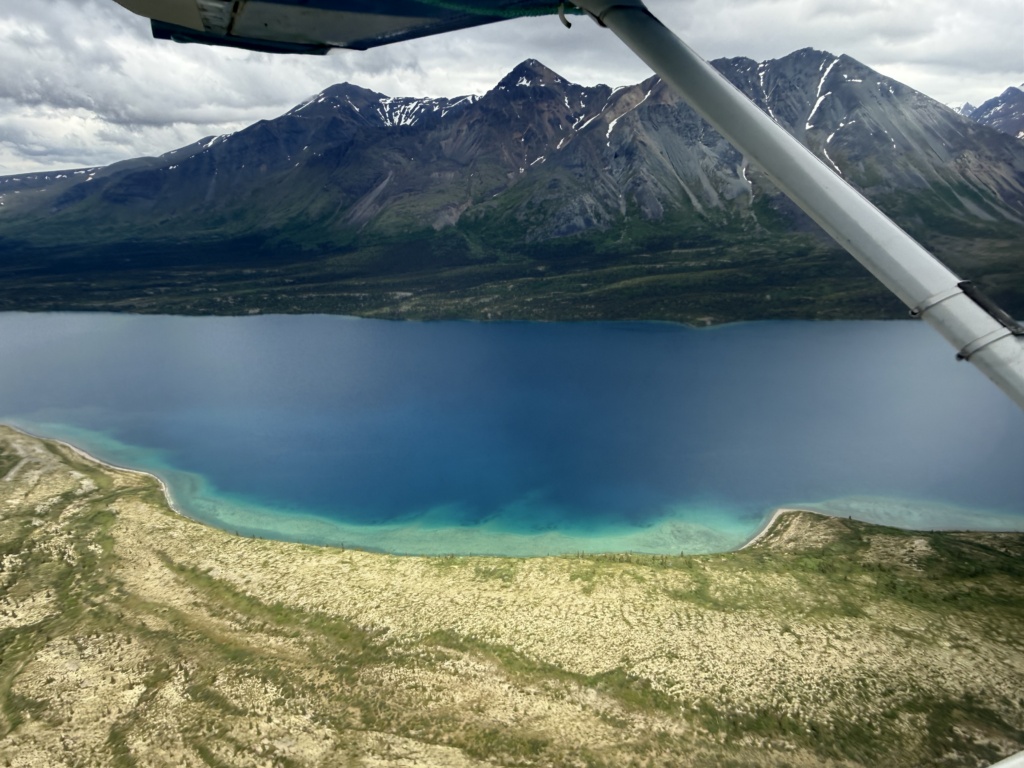
The following morning we boarded a Lake Clark Air flight from Anchorage’s Merrill Field airport and headed southwest through Lake Clark Pass. Even by Alaska standards, the route is spectacular with glacier bowls cradled by jagged peaks. Every passenger spent the flight with their face pressed toward the window.
We landed briefly in Port Alsworth on the shores of Lake Clark, where we enjoyed bag lunches prepared by our guides while they double-checked the mountain of gear that would somehow fit into three inflatable sea kayaks. Then we hopped on a float plane for a 20-minute flight to Upper Twin Lake and touched down near Hope Creek Campground.
The distant sounds of civilization disappeared almost instantly, replaced by Arctic terns calling overhead, gentle waves lapping against the rocky shoreline, and far fewer mosquitoes than I’d expected.
Hope Creek Campground became our home for the next two nights. Ranger Russell welcomed us as we unloaded kayaks and dry bags onto shore. The campground offered flat tent sites, bear-proof food storage, and little else.
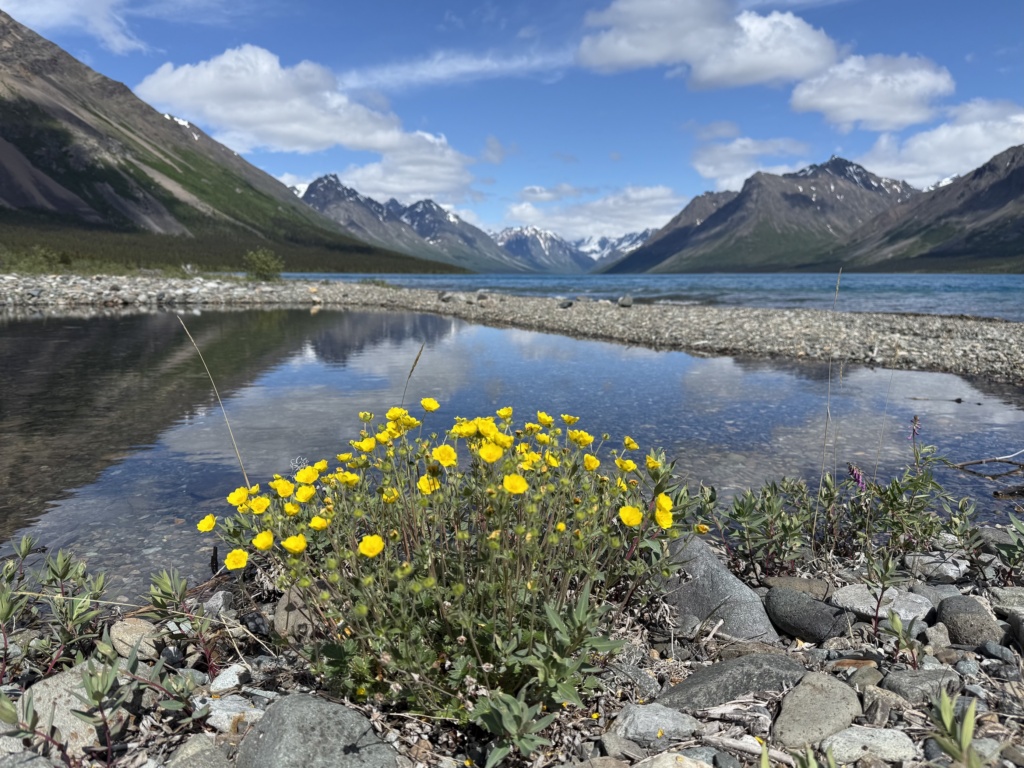
That evening we wandered to the nearby remains of an abandoned cabin before gathering around camp for our first dinner. I had expected the usual camping menu of freeze-dried meals, but our guides immediately shattered that assumption. Freshly cooked pasta with crisp bacon bits and fresh garlic, homemade desserts, and steaming mugs of tea made for a satisfying meal on the lake’s shore. Over the next week we’d enjoy breakfast burritos, curry chicken wraps, smoked salmon, deconstructed enchiladas, pasta carbonara, hearty trail lunches, and desserts that would have been impressive even in a fully equipped kitchen. Alaska Alpine Adventures operates a commercial kitchen where all the meals are prepared from scratch and packaged for multi-day adventures, taking into account all the guests’ dietary needs.
The following morning we paddled our kayaks around Hope Creek to Dick Proenneke’s cabin, tucked just around the shoreline from camp. The short paddle gave everyone an opportunity to become comfortable handling the inflatable kayaks before longer crossings later in the week.
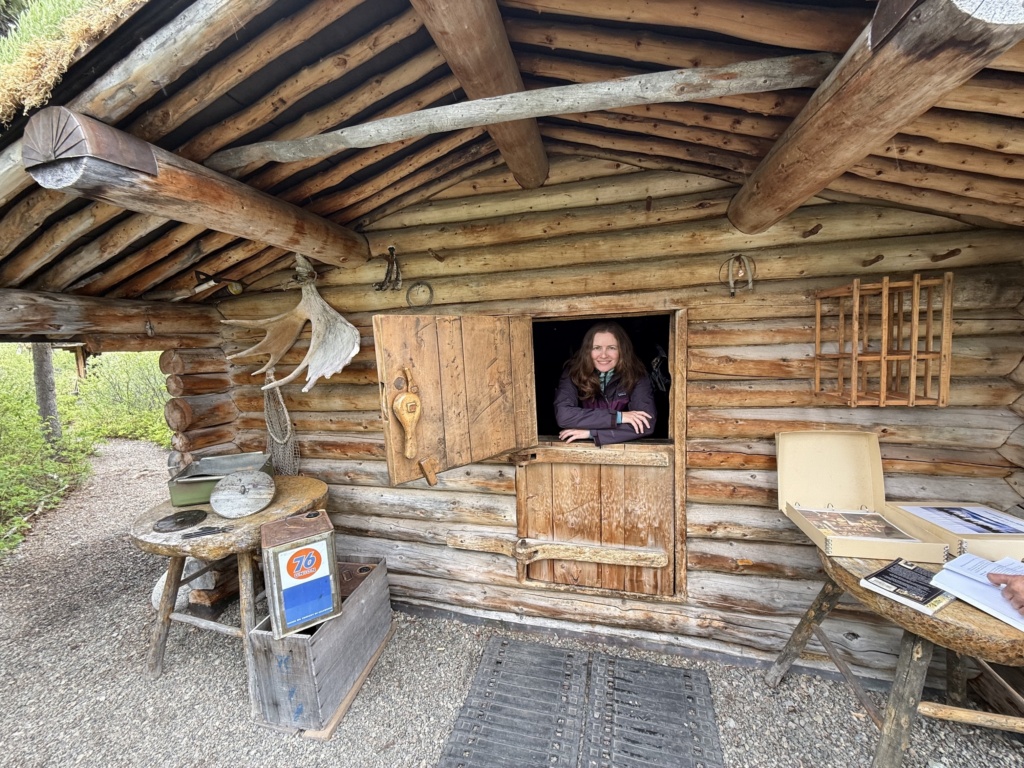
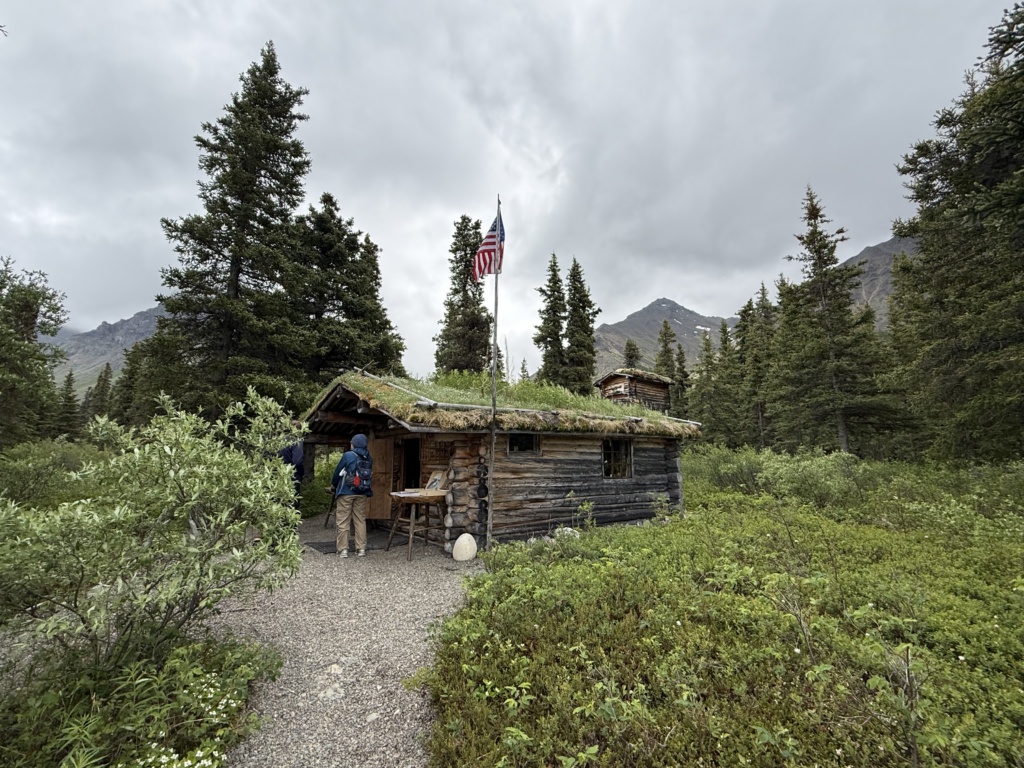
When we arrived, the area was unexpectedly busy. A wedding was taking place, while several floatplanes delivered visitors for cabin tours. Seeing the cabin for the first time felt almost like meeting a celebrity. Standing beside it revealed that it’s smaller than I had expected.
Every log, shelf, hinge, and notch reflected Proenneke’s skills and extraordinary attention to detail. Ranger Russell’s tour brought the place to life. He explained that Dick originally settled here when the land was managed by the Bureau of Land Management, before it became part of Lake Clark National Park. Listening to those stories while standing inside the tiny cabin gave me an entirely new appreciation for the patience, craftsmanship, and self-reliance that defined his life.
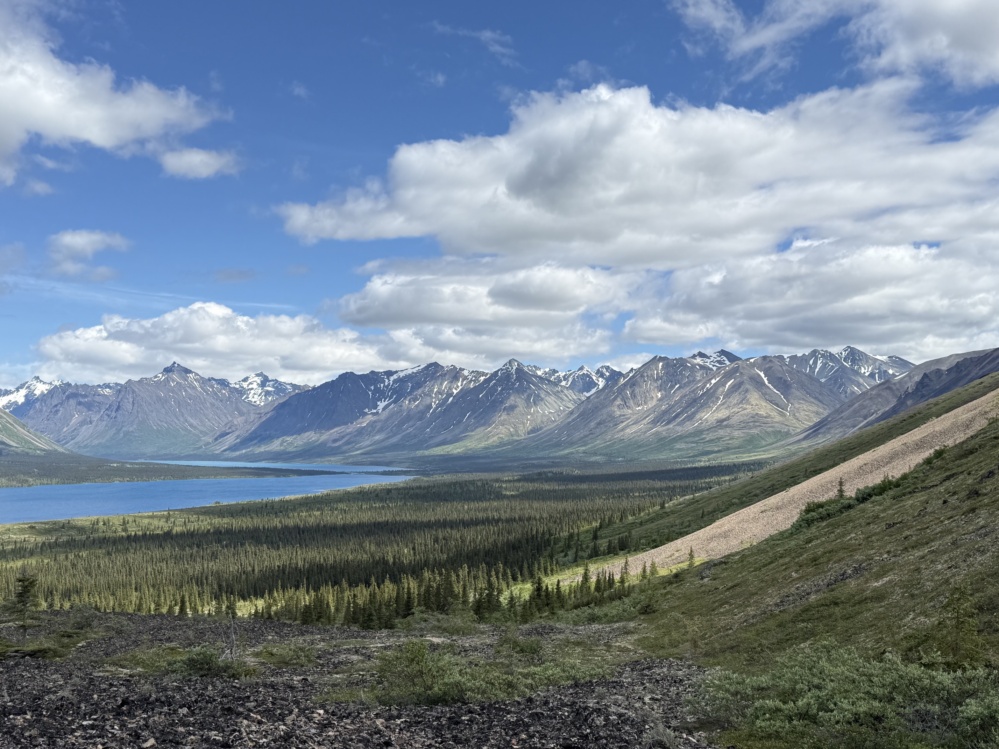
Leaving the cabin behind, we hiked across rolling tundra toward Teetering Rock. Every few minutes we stopped to admire another sweeping view of Upper Twin Lake. Lunch at Teetering Rock offered one of the finest picnic settings I’ve ever experienced.
Back at camp, a couple of us decided that a quick plunge into Upper Twin Lake was a proper way to finish the afternoon. One item that was not included on the extensive gear list was a swimming suit, but I packed mine for this lake vacation. That evening we warmed up over steaming bowls of udon noodles.
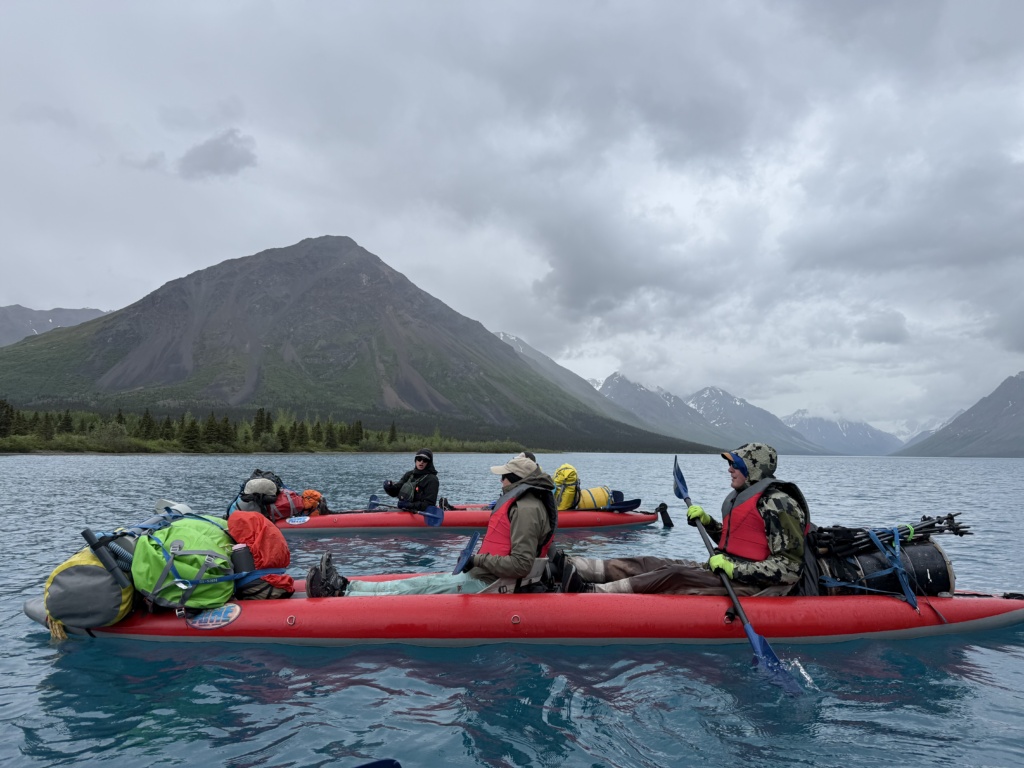
As we packed up our campsite the next morning and loaded up our gear onto the inflatable kayaks, clouds formed in the distance. By the time we reached a beach halfway down Upper Twin Lake, we felt the first raindrops. Everyone was soaked when we arrived to our campsite on Lower Twin Lake. Although the two lakes are connected by a short channel, they are surprisingly different in color. Upper Twin Lake shimmered with brilliant turquoise water that looked almost tropical beneath blue skies. Lower Twin Lake had an entirely different personality with darker water reflecting the surrounding mountains.
Within minutes, however, the guides had transformed a rainy gravel beach into a remarkably comfortable camp. Tents sprang up, wet gear was organized, and hot chocolate was being offered to us. Steaming bowls of pasta with reindeer sausage appeared while rain drummed overhead. Sitting beneath the cooking shelter, wrapped in rain gear with a hot meal in my hands, I realized that miserable weather often creates the memories people talk about the longest.
That evening also taught me an important lesson about traveling in the Alaskan backcountry. Every item on Alaska Alpine Adventures’ recommended packing list suddenly made perfect sense. Dry base layers, rain gear, waterproof stuff sacks, camp shoes, extra socks made the difference between comfort and misery.
The next morning happened to be my forty-fifth birthday. As rain fell steadily through much of the night, in my mind I put in a request to no one in particular for better weather. When I unzipped the tent a few hours later, the storm had cleared just enough to reveal fresh snow dusting the surrounding mountain peaks. It felt like the park had given me a birthday present.
That day we hiked up Emerson Creek to Emerson Falls, a place often mentioned in Dick’s journal entries. The creek had flooded parts of the trail and we followed as the guides led us through knee-deep water. The views of both lakes and surrounding mountains from the top were spectacular.
Back at camp, I convinced everyone, including the guides, to jump into the lake to freshen up. After dinner they surprised me with a birthday cake made from dessert bars, adorned with wildflowers and candles. That special touch really made my day!
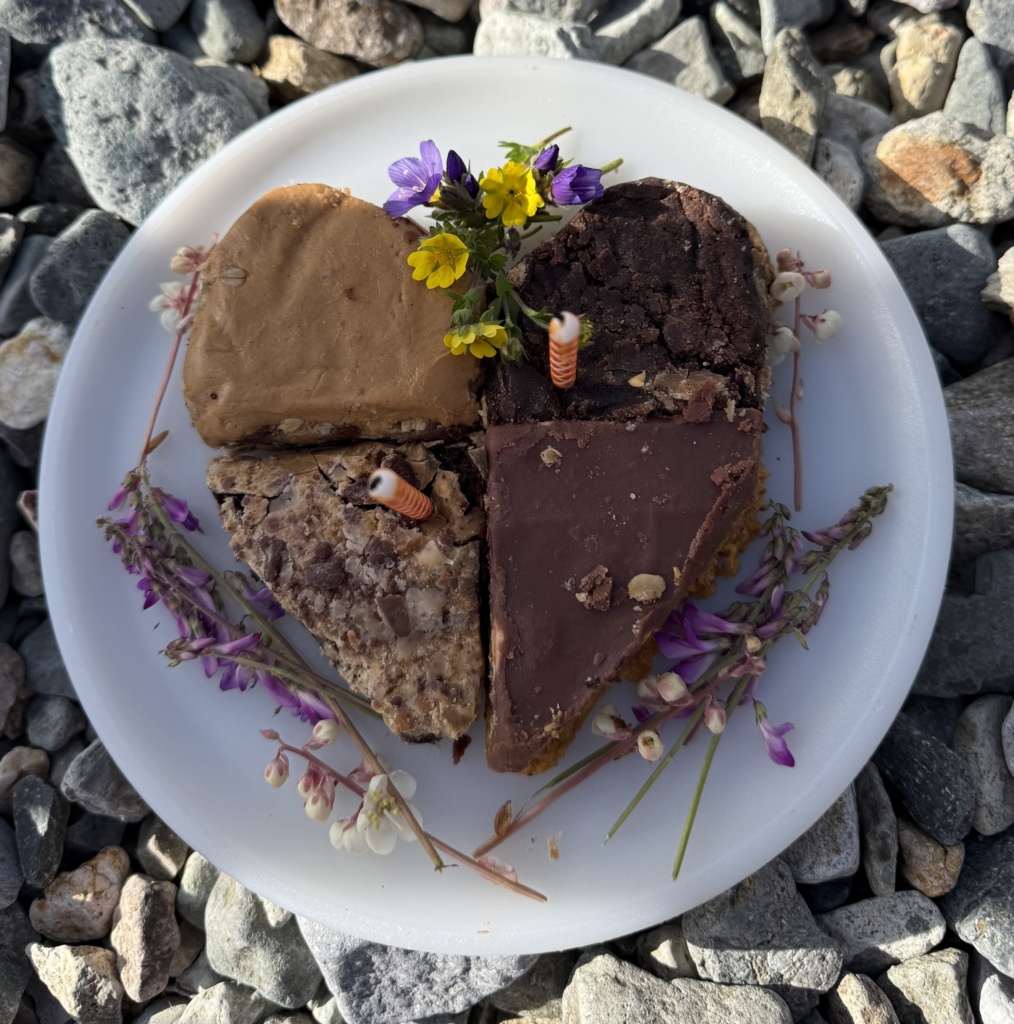
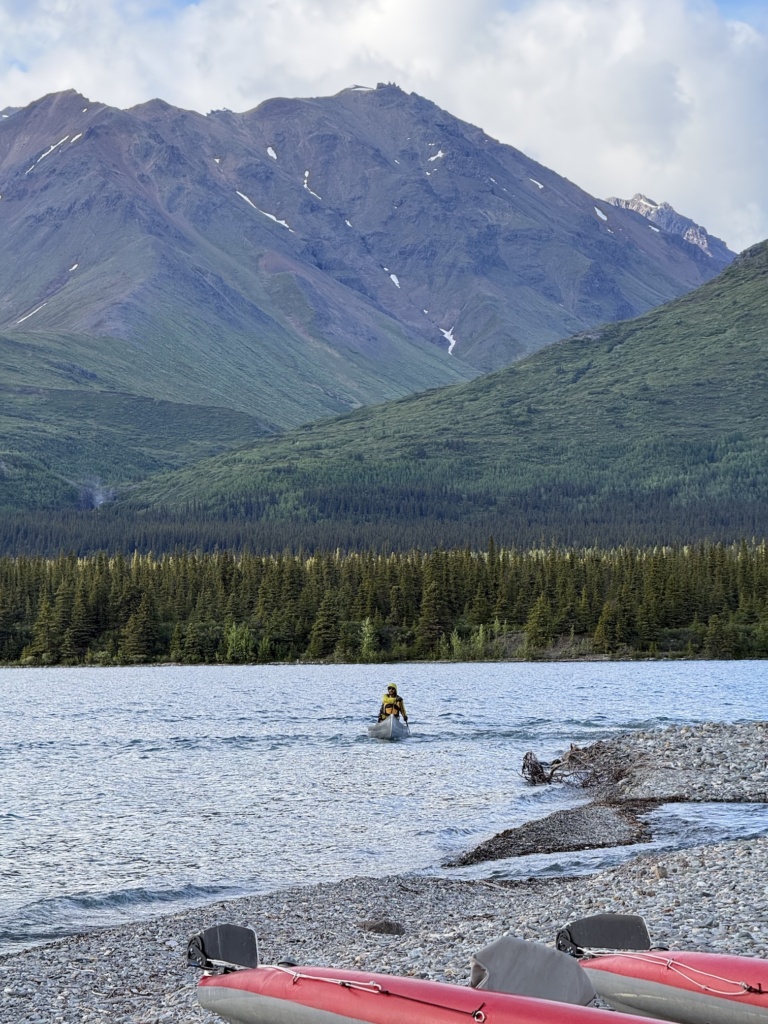
Later that evening we couldn’t believe our eyes when we saw Ranger Russell paddling into camp by canoe, planning to spend the night nearby before heading into the backcountry on his day off. He paddled all the way across Upper Twin Lake after his work shift and was full of energy when he landed on the beach next to our camp. His passion was contagious, and by the time he paddled away the following morning, all of us agreed that he was born for that job.
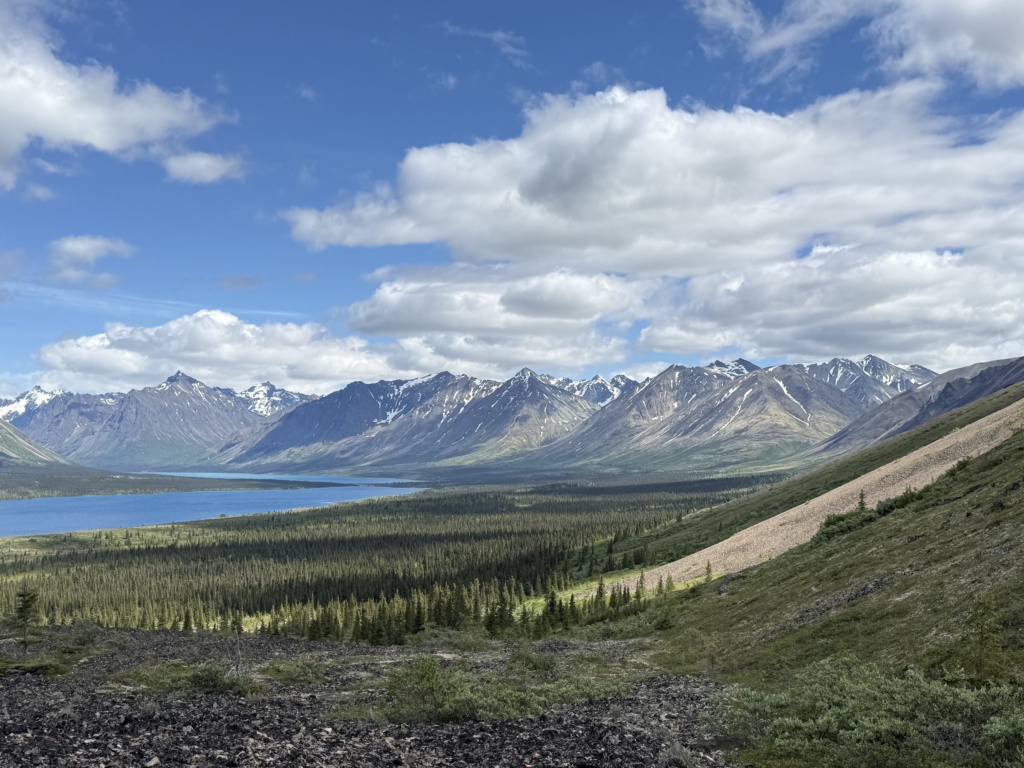
Our final full day took us into an area known as Death Valley. Despite its intimidating name, the broad valley was spectacular, framed by rugged mountains and dotted with colorful wildflowers. We wandered through the landscape without another group in sight, pausing frequently to photograph the flowers and examine interesting rocks on a dried up creek bed.
In our everyday lives, true quiet is surprisingly rare. Even when we seek nature, we often bring notifications, schedules, traffic, or crowds with us. At Twin Lakes, there were long stretches where the only sounds were paddles dipping into the water, distant loons calling across the lake, or the wind moving through the willows. I easily understood why Dick Proenneke stayed.
Before this trip, I had admired his craftsmanship and independence. After spending nearly a week traveling through the country he called home, I began to appreciate the life he built that moved at the pace of the landscape around him.
Many people come to Lake Clark National Park because of one remarkable little log cabin, and rightly so. It remains one of Alaska’s most inspiring historic places. But after spending a week paddling its lakes, hiking its tundra, sharing meals around camp, and waking each morning surrounded by mountains, I came away with a different perspective. The cabin isn’t extraordinary simply because Dick Proenneke built it. It’s extraordinary because of where he chose to build it.
Share this Post
